This foot and ankle surgery recovery guide explains what most patients can expect after procedures such as bunion correction, Achilles tendon repair and ankle ligament reconstruction, including how long healing usually takes, when weight bearing typically begins, and which symptoms deserve a call to your surgical team. Recovery is rarely a straight line, and understanding the stages in advance makes the process far less daunting. Consultant Trauma and Orthopaedic Surgeon Mr Samir Hakeem sees this repeatedly in clinic: patients who know what a normal week three looks like worry far less when their foot is still swollen.
Mr Samir Hakeem is a Consultant Trauma and Orthopaedic Surgeon at Borders General Hospital, NHS Scotland, with a practice devoted to foot and ankle surgery . He works with patients across Edinburgh and the Scottish Borders, treating bunions, ankle arthritis, ligament injuries, Achilles tendon disorders and complex deformity, following subspecialty fellowship training at the Freeman Hospital in Newcastle and at Addenbrooke’s Hospital in Cambridge. The information below is educational and general; your own recovery plan will always be set by your treating surgeon.
What Should a Foot and Ankle Surgery Recovery Guide Cover?
The foot and ankle carry the whole weight of the body, sit furthest from the heart and have relatively thin soft tissue cover. Those three facts explain almost everything about recovery after foot surgery: swelling lingers, elevation matters enormously, and bone or tendon healing cannot be rushed simply because you feel ready.
A useful foot and ankle surgery recovery guide should therefore address:
- Expected timescales for pain, swelling and return to normal footwear
- Weight bearing instructions, and why they differ between procedures
- Wound care, dressings and stitch removal
- Pain relief and how to reduce reliance on stronger painkillers
- Blood clot prevention and mobility while resting
- Physiotherapy and graded return to activity
- Realistic timelines for driving, work and sport
- Warning signs that need prompt medical review
Recovery advice is always procedure specific. Keyhole ankle arthroscopy, a first metatarsal osteotomy for a bunion and an ankle fusion all heal on very different schedules, so written instructions from your own surgical team always take precedence over general information found online, including this article.
How Long Does Recovery Take After Foot and Ankle Surgery?
Most patients ask about time before anything else. As a broad rule, soft tissue procedures settle faster than bone procedures, and bone that has been cut or fused needs several months to remodel fully. Swelling is often the slowest thing to resolve and may fluctuate for six to twelve months, particularly at the end of the day or in warm weather.
What Does This Foot and Ankle Surgery Recovery Guide Say About Bunion Surgery?
After bunion surgery, patients are commonly allowed to bear weight in a protective shoe or boot from an early stage, depending on the technique and fixation used. Comfortable, roomy footwear usually becomes possible around six to eight weeks, while forefoot swelling and stiffness in the big toe can take considerably longer to settle.
Achilles Tendon Surgery
Achilles repair or reconstruction is protected in a boot or cast with the ankle initially held in a downward position, then gradually brought to neutral as the tendon heals. Progression is deliberately slow because tendon tissue regains strength over months, not weeks. Calf strength and single leg hop capacity are often the last things to return, and structured rehabilitation is central to the outcome.
Ankle Ligament and Cartilage Procedures
Following ankle ligament surgery for chronic instability, a period of protection is followed by progressive balance and proprioception work. Many patients walk comfortably within a few weeks but need several months of rehabilitation before returning confidently to pivoting sports. Arthroscopic procedures may allow faster early mobility, though the underlying cartilage or bone problem still dictates the timeline.
Fusion and Reconstruction Surgery
Ankle fusion, subtalar fusion and complex foot reconstruction involve bone healing across a prepared joint surface, so a longer period of restricted weight bearing is usual and radiographs guide progression. These are among the longest recoveries in foot and ankle practice, but they are also the procedures where careful adherence to instructions makes the greatest difference.
The Key Stages in a Foot and Ankle Surgery Recovery Guide
Thinking in phases helps patients judge whether progress is on track. The following sequence is typical, though the length of each phase varies widely between procedures.
- Days 0 to 14: protection and swelling control. Rest with the foot elevated above heart level for the majority of the day, keep dressings clean and dry, and take regular pain relief as advised.
- Weeks 2 to 6: wound healing and early movement. Stitches are usually removed, dressings simplify, and gentle movement of unaffected joints begins where permitted.
- Weeks 6 to 12: progressive loading. Weight bearing advances, footwear changes and physiotherapy becomes more active, focusing on gait, balance and strength.
- Months 3 to 6: strengthening and return to activity. Walking distance increases, low impact exercise resumes and many patients return to most daily activities.
- Months 6 to 12: consolidation. Residual swelling settles, scar tissue softens and sporting or high demand activity is reintroduced where appropriate.
How Can You Manage Pain and Swelling During Recovery?
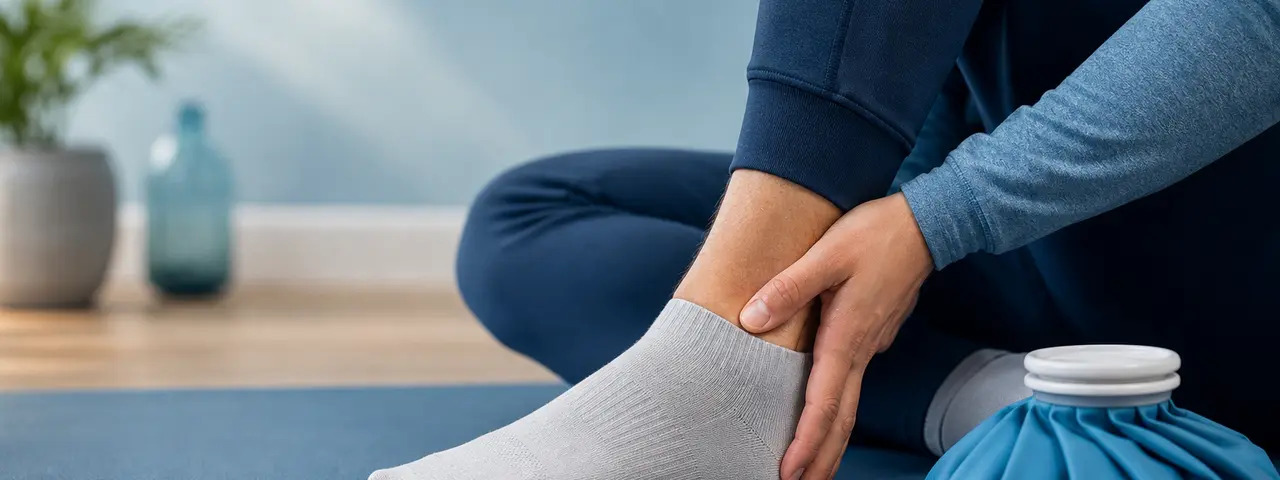
Pain is usually most intense in the first two to three days, then improves steadily. Simple measures are often the most effective. Elevation reduces throbbing more reliably than any tablet, and most patients find that pain increases predictably whenever the foot has been dependent for too long.
- Elevate the operated foot above the level of the heart, supported along its length rather than at the heel alone
- Take prescribed or recommended pain relief regularly at first, then reduce as comfort allows
- Move the hip, knee, fingers and unoperated limb frequently to maintain circulation
- Keep the cast, boot or dressing dry and avoid removing dressings early
- Stay well hydrated and eat protein rich food to support tissue healing
- Stop smoking if possible, as tobacco use is associated with poorer wound and bone healing
Blood clot prevention is an important part of any recovery plan. NICE recommends that patients undergoing surgery are individually assessed for their risk of venous thromboembolism, and that prevention measures are tailored accordingly, which is why some patients are given anticoagulant injections or tablets while others are not.
How Can You Support a Smoother Recovery?
Preparation before the operation influences the weeks afterwards more than most people expect. Practical planning removes much of the frustration of limited mobility.
Practical Preparation Recommended in This Foot and Ankle Surgery Recovery Guide
- Arrange help at home for the first one to two weeks, especially for shopping and stairs
- Prepare a downstairs resting area with cushions, chargers, water and reading material within reach
- Practise using crutches or a knee walker before surgery if you have been prescribed one
- Buy loose footwear for the non operated foot and consider a waterproof cast cover for washing
- Confirm sick leave arrangements with your employer and clarify expected time off
- Check your insurance position regarding driving, as you must be able to control the vehicle safely and perform an emergency stop
Frequently Asked Questions
How long is recovery after foot and ankle surgery?
Most patients follow a foot and ankle surgery recovery guide spanning three to six months, with soft tissue procedures healing faster and fusions or reconstructions taking longer. Comfortable walking often returns within six to twelve weeks, while swelling and full strength may take up to a year to settle.
When can I drive again after foot or ankle surgery?
Driving is possible only when you can safely control the pedals and perform an emergency stop without hesitation, out of any boot or cast. For right sided surgery this is usually longer. Confirm timing with your surgeon and check your motor insurance policy first.
Why is my foot still swollen months after surgery?
Prolonged swelling is common because the foot sits below heart level for most of the day and lymphatic drainage takes time to recover. It typically improves gradually over six to twelve months. Persistent, painful or one sided calf swelling should always be assessed promptly.
How soon can I return to work?
Desk based work with the leg elevated may be possible within two to four weeks for many procedures, while standing, manual or driving roles often require considerably longer. Your surgeon can advise on a realistic date and provide documentation for your employer.
Do I need physiotherapy after foot and ankle surgery?
Physiotherapy is recommended after most procedures, particularly Achilles repair, ligament reconstruction and joint preserving surgery. Guided exercise helps restore movement, balance and calf strength, and can support a safer return to walking distance, work tasks and sport.
Can I speed up my recovery?
You cannot accelerate bone or tendon healing, but you can protect it. Following weight bearing instructions, elevating consistently, attending physiotherapy, eating well and avoiding smoking all support healing. Doing too much too early risks setbacks rather than faster progress.
Recovery after foot and ankle surgery rewards patience, preparation and clear communication with your surgical team. Understanding the stages, knowing which symptoms matter and following procedure specific instructions gives you the best chance of a comfortable, predictable result. To discuss your symptoms, treatment options or your own recovery plan, you can book a consultation with Mr Samir Hakeem, Consultant Trauma and Orthopaedic Surgeon, who offers foot and ankle assessment for patients in Edinburgh and the Scottish Borders, including same week appointments where available.